BRAND
READ 06 MIN
When people talk about building a brand, the conversation often begins with what can be seen.
The logo. The colours. The typography. The website.
These things matter. They help us recognise a business and give it a visual language of its own. But they are only one part of what makes a brand feel distinct.
Because a brand does not live only in what people see.
It also lives in what they hear from you, what they experience when they work with you, and in the impression that remains afterwards.
That is why a beautiful identity can attract attention, but it cannot carry a business on its own.
The logo is a beginning, not the whole story
A good logo has an important job.
It gives a business a recognisable signature. It can communicate something about its character before a single word is read.
But we sometimes ask too much of it.
We expect the logo to make the business feel established, trustworthy, different or premium — even when those qualities are not yet present in the rest of the experience.
And that is where the difference between a logo and a brand becomes clearer.
A logo can represent trust.
It cannot create trust on its own.
A visual identity can suggest care and attention.
But people need to experience that care in the way the business actually behaves.
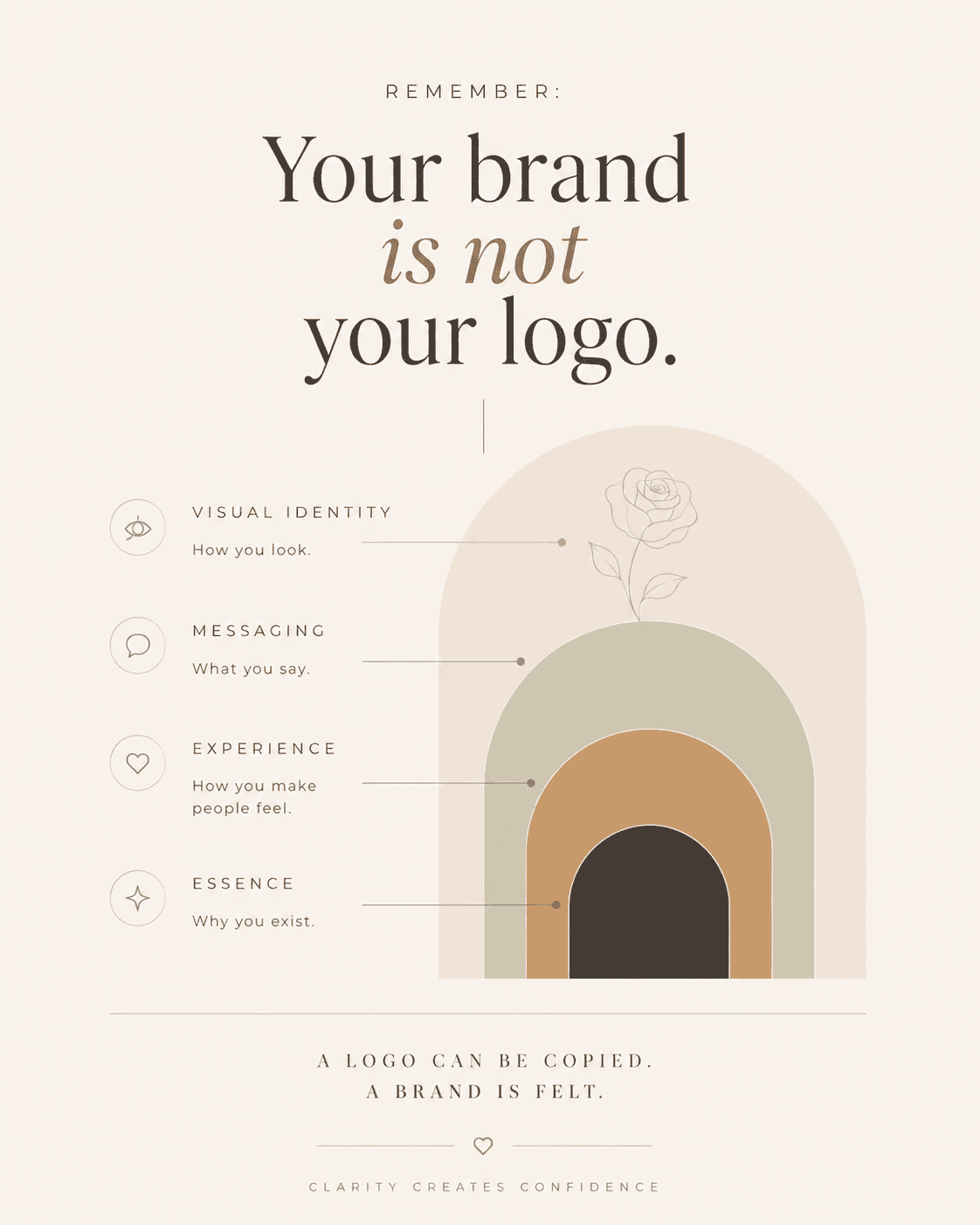
People are listening too
The words a business chooses are part of its identity.
Not only the headline on a homepage or a carefully written tagline, but the smaller things too.
How you explain what you do. How you respond to an enquiry. How you introduce a proposal. How you say no. How you handle a difficult conversation.
Over time, those moments begin to create a voice.
And when that voice feels natural and consistent, people start to recognise the business even without seeing the logo.
That is when messaging becomes part of the brand rather than simply part of the marketing.
Then comes the experience
This is perhaps the part of branding we notice least while we are creating it — and the part clients and customers may remember most.
What was it like to work with you?
Did the experience match what the website seemed to promise?
Was the process thoughtful?
Did communication feel clear?
Did someone feel listened to?
A beautifully designed brand that promises simplicity but creates a complicated experience sends two different messages.
Neither needs to be said aloud. People feel the difference.
And the opposite is also true.
When the visual identity, communication and experience tell the same story, there is a sense that everything belongs together.
Underneath all of it is something more personal
Before the logo, the messaging and even the experience, there is a more fundamental question:
Why does this business exist in this particular way?
Not the polished mission statement.
The real answer.
What matters enough that you keep returning to it?
What do you believe should be done differently?
What do you want people to experience because your business exists?
This is the part I think of as the essence of a brand.
It is often quiet. A client may never see it written anywhere.
But it influences everything else.
It helps determine what belongs and what does not. It makes decisions easier. And it gives the visual identity something real to express.
When the pieces begin to belong together
For me, this is where branding becomes interesting.
Not when every colour has been selected or the final logo file has been exported.
But when the business starts to feel like the same business wherever you meet it.
The words belong to the visual identity.
The experience supports the promise.
The decisions reflect the same underlying point of view.
Nothing needs to shout.
It simply feels coherent.
And perhaps that is why we remember certain brands long after we have forgotten exactly what their logo looked like.
We remember how they made sense to us.
We remember how they made us feel.
A logo helps us recognise a business.
A brand gives that recognition meaning.